
We invite you to read the results of the research on the influence of nanowells on the viability and proliferation capacity of neoplastic cells of the human hematopoietic system (i.e. leukemia cells).
At the Medical University of Lublin, we examined the effect of a culture fluid (i.e. a mixture of different ingredients used to maintain the culture of neoplastic cells) on neoplastic cells of the leukemia type.
Our research shows that cells, due to keeping their culture in processed fluid in a low-temperature plasma reactor, tend to apoptosis (i.e. programmed cell death).
Here is an excerpt from the introduction from the study of the research results:
Neoplastic diseases are currently one of the greatest problems of modern medicine. Treatment of neoplastic diseases is based mainly on radio- and chemotherapy. The effectiveness of such a procedure is still very limited and depends on the stage of the disease. Regardless of the stage of cancer development, chemotherapy is always very toxic and causes many severe side effects. Among the main ones we can mention - changes in the blood picture, impaired function of the marrow, liver or the entire genitourinary system and others. The limited effectiveness and high toxicity of chemical treatment prompts to seek an alternative solution. Hence, the search for a therapy that uses physical phenomena occurring in the body is a new direction.
One solution under consideration is the use of nanotechnology. Nanotechnology concerns the methods of obtaining various structures with sizes ranging from 0.1 to 100 nanometers. This means that the size of these structures is at the level of individual atoms and particles. The beginning of the development of nanotechnology dates back to the 1950s. In nature, however, living organisms have always had structures controlled at the level of individual particles. Such structures include, first of all, biological membranes, as well as the structure of bone, skin and wood. The global development of nanotechnology has led to the combination of this technology with medicine.
One of the possibilities of introducing nanotechnology to treatment is to use the biological effect of water on the cells of a living organism. Water is a physico-chemical unique substance - its properties differ from those expected for compounds of similar structure. It is the only substance that occurs naturally in three states of aggregation on Earth. When it becomes solid, it expands - contrary to other liquids. As the only known substance, it has a maximum density in the liquid state, and its specific heat is minimal at a temperature of approx. 37 ° C. Most importantly, however, liquid water absorbs electromagnetic radiation, beyond a narrow range in the visible light area. These properties are important because water constitutes about 70% of the mass of the human body. Thus, its "quality" determines the functioning of the entire system at all levels of its operation.
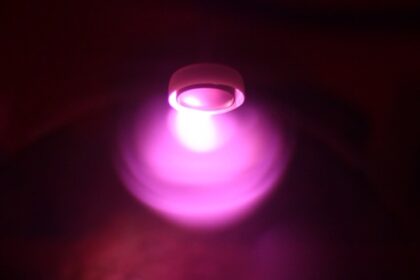
To create a product called NANO-water, NANTES used the ability of water to absorb electromagnetic radiation emitted by a stream of low-temperature plasma. Water treated with low-temperature plasma has a number of properties that differ from those normally found in water. The reason for this is the size of the water clusters formed in the NANO-water production process, which are energetically stable and lose the ability to form gigaclusters. Under the influence of the low energy of interaction of ions, atoms from nonlinear oscillations form into chains and as a result the molecules stabilize in new places. This leads to the formation and development of new metastable molecular groups (nanoclusters). In homogeneous chains, the formed nanoclusters correspond to the elements of "molecular memory". The critical energy needed for the development of self-organization of the processes is less than for non-linear molecular chains with already built-up clusters. In the case of nanoclusters, the zone that determines further self-organization processes becomes active. Clusters are formed that provide new physical and chemical properties of the complexes. Hydrogen bonds are also likely to change. When water with altered hydrogen bonds enters into structures based on these bonds, such as DNA and other nucleic acids or proteins, it can affect their functions. The authors attempted to assess the effect of NANO-water on neoplastic cells derived from the human hematopoietic system.